
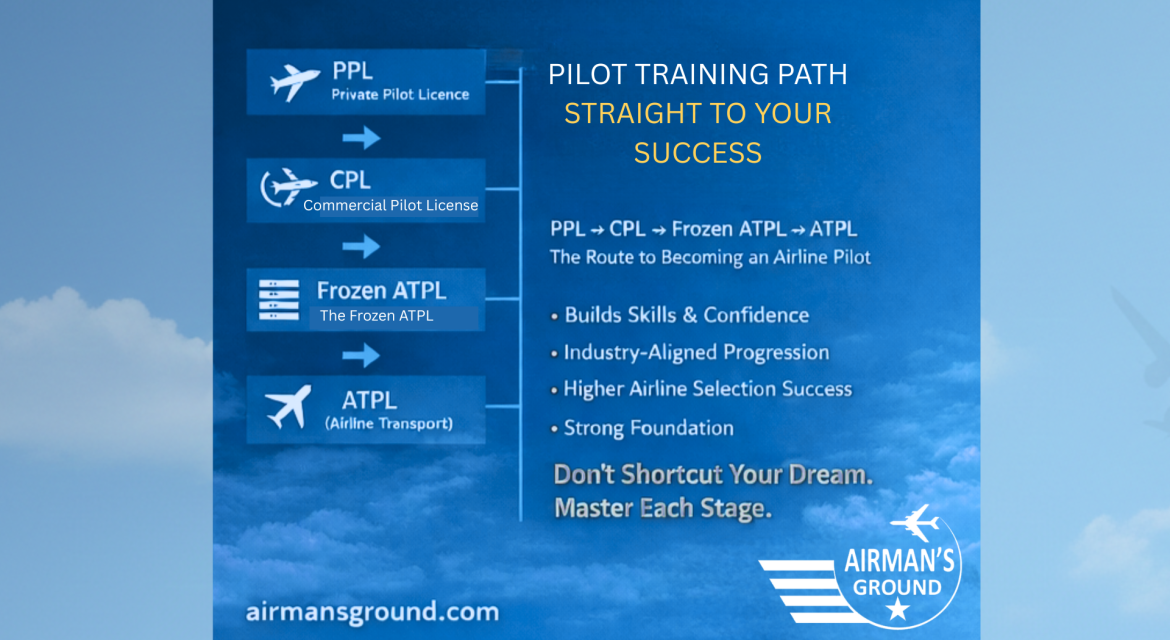

Pilot Training Path: PPL, CPL, Frozen ATPL, ATPL
Understanding Pilot License Progression for Pilot Training
Cannot decide from which course learning path is best for your successful pilot training? Many student pilots ask whether they can go directly for ATPL instead of following the traditional route of PPL → CPL → ATPL. While the idea may sound faster, aviation training is designed in steps for a reason. Each license builds the skills, knowledge, and responsibility required to become a safe and competent airline pilot.
Airman’s Ground focuses on making the students understand the basic difference between Frozen ATPL and ATPL is essential before making this decision.
What is PPL (Private Pilot License)?
PPL is the first step in a pilot’s journey. It introduces:
-
Basic flying skills
-
Aircraft handling
-
Navigation and communication
-
Aviation discipline and safety mindset
At this stage, students learn how to fly, not how to fly commercially.
CPL (Commercial Pilot License) in Pilot Training
CPL, the second course to be chosen, allows pilots to fly professionally. This stage focuses on:
-
Advanced flying skills
-
Decision-making under pressure
-
Commercial operations knowledge
-
Strong situational awareness
CPL training transforms a student pilot into a professional pilot.
What Is a Frozen ATPL?
A Frozen ATPL(Airline Transport Pilot License) means a pilot has:
-
Passed all ATPL theory exams
-
Holds a CPL with Multi-Engine and Instrument Rating
-
Does not yet meet the flight hour requirement for a full ATPL
The license remains “frozen” until the required flight hours are completed.
What is Full ATPL?
A full ATPL is the highest pilot license. It allows a pilot to:
-
Act as Captain on airline aircraft
-
Hold full command responsibility
To obtain it, pilots must complete extensive flight hours, operational experience, and meet strict regulatory standards.
Also, read : Why Modular Pilot Training Is the Smarter, More Flexible Way to Become a Pilot.
Why Students Should Not Go Directly for ATPL
1. Aviation Is Skill-Based, Not Just Exam-Based
Passing ATPL exams without flying experience leads to weak practical understanding.
2. In Pilot Training, PPL and CPL Build the Right Foundation
Skipping steps removes critical learning phases that develop:
-
Confidence
-
Judgment
-
Safety awareness
3. Airlines Value Structured Progression
Airlines prefer pilots who follow a proper training pathway, not shortcuts.
4. Better Pilot Training
Step-by-step training produces pilots who perform better in:
-
Type rating
-
Simulator assessments
-
Line training
Check : ATPL Explained
The Smart and Proven Path: PPL → CPL → Frozen ATPL → ATPL
This progression ensures:
-
Strong theory and flying balance
-
Exam readiness without pressure
-
Industry-aligned pilot mindset
-
Higher success in airline selection
Frequently Asked Questions (FAQs)
1. Can I start ATPL theory without flying experience?
Yes, but it is strongly recommended to combine theory with flying stages for better understanding.
2. In pilot training, is Frozen ATPL enough to get an airline job?
Yes. Most airlines hire pilots with Frozen ATPL, not full ATPL.
3. Why can’t I get a full ATPL directly?
A full ATPL requires minimum flight hours and operational experience, which cannot be skipped.
4. Does Frozen ATPL expire?
No, but ratings and medical validity must be maintained.
5. Which route is safer for successful pilot training?
The PPL → CPL → Frozen ATPL route is the safest and most globally accepted path.
6. How does Airman’s Ground support this journey?
Airman’s Ground prepares students with strong theory, exam readiness, and pilot mindset before flight training.

